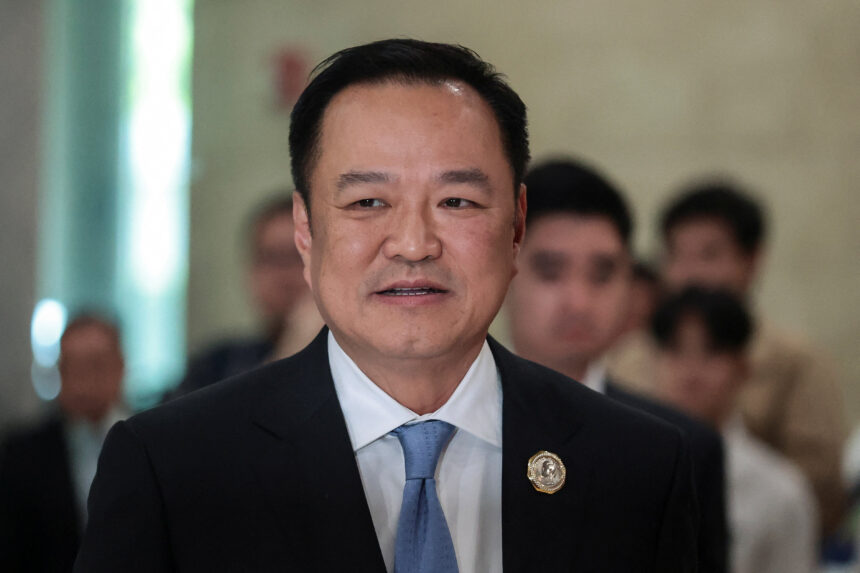
Few politicians in Asia have captured the world’s attention with such a single policy.
Anutin Charnvirakoon, known as the Prime Minister and former Minister of Public Health of Thailand,
led the region’s boldest cannabis policy shift, reframing the debate in the global medical, agricultural, and tourism industries.
His reforms are not just about deregulation.
It was a national innovation model that sought to integrate “medical care, agriculture, local economy, and international business.”
■ The new trend of the “Thai cannabis model”
Anutin’s point was always clear.
Anutin’s point was always clear.
This perspective is different from the global cannabis debate, and has attracted attention as an “industry model originating from Asia.”
The main points he made were:
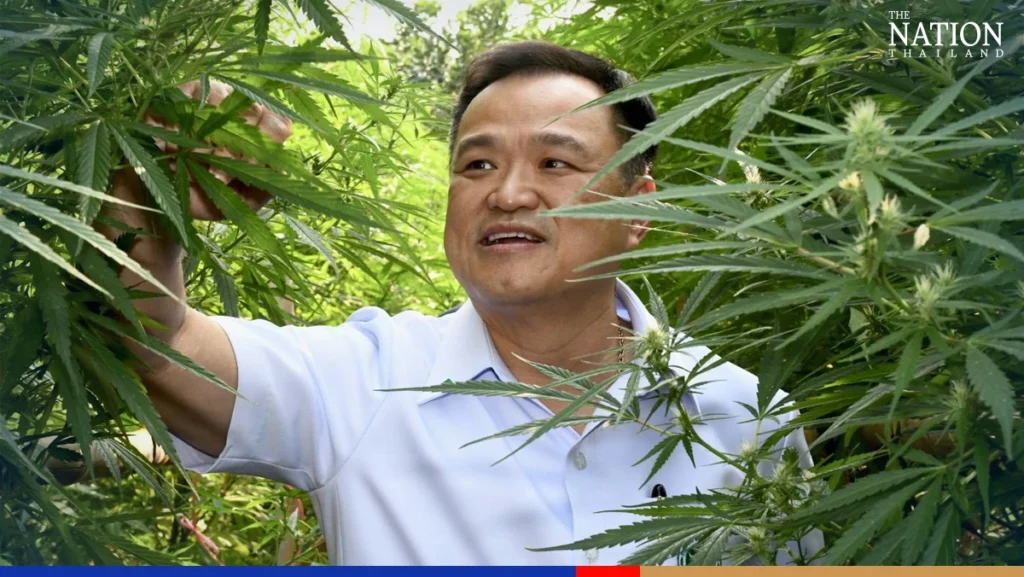
Expanding access to medical cannabis
●Establishment of a system that allows farmers to enter cultivation
● Permitting cannabis-related businesses to promote local communities
●Expansion of research and development structure
● Collaboration with the tourism industry
Thailand was briefly recognized as a “marijuana legalization country” by the world because his policies made such a strong impression on the international media.
■ The assessment that it will "save the world" is not an exaggeration, but has structural significance
Of course, Anutin is no savior.
However, international analysts sometimes express it this way:
“He advanced the global drug policy debate by being the first in Asia to break the ‘barrier of prohibition.'”
In other words, the phrase “saving the world” is not a deification, but a metaphor for making a breakthrough in an issue that had stalled in global policy discussions.
His reforms have had great impact.
● Accelerating medical cannabis research
Case data from Thailand has become a new source of information for the global clinical research community.
● Redefining the value of agricultural products in the Asian market
Hemp as a high-value agricultural product has expanded farmers’ business models.
● Moving away from uniform drug policies
What’s significant is that they have created a unique Asian approach,
rather than following either the Western model or the strict Chinese model.
■ Anutin's true essence lies in philosophy rather than policy
Although Anutin has received criticism from some quarters, he has consistently spoken about the “integrated value of healthcare, agriculture, and small and medium-sized businesses.”
“Cannabis is more than just a plant. It’s a science, a culture, and an economy.”
Using this phrase as a basis, he attempted to envision a “new form of green industry.”
The market was astonished by the multi-layered scale of this idea.
■ Re-regulation in Thailand, but why it continues to be highly rated worldwide
With the change of government in Thailand, cannabis is returning to a more regulated regime.
However, what is interesting is that the opposite is true: overseas policy researchers still hold Anutin in high regard.
The reason is simple.
The historical fact that he was “the first politician in Asia to take action.”
When it comes to policy changes around the world, the benchmark is always the “first mover.”
He set the standard.
■ **Questions left behind by Anutin:
“Is Drug Policy a Health Policy, an Economic Policy, or a Social Policy?”**
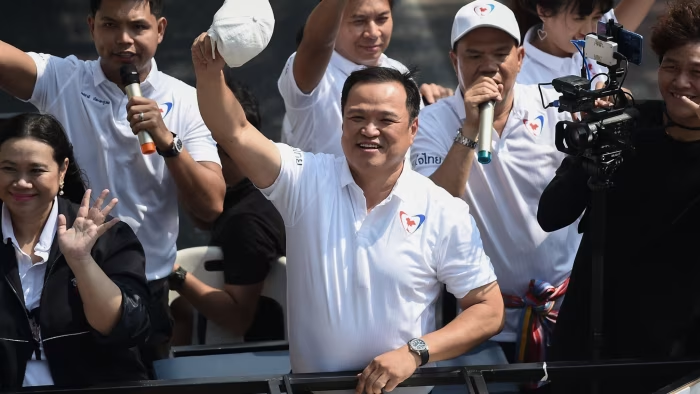
Anutin’s reforms continue to pose new questions to the world:
Where is the line between addiction prevention and medical use?
● Is the stricter the regulation, the better?
How should plant-derived medicines be handled?
●Is it possible to create synergies with agriculture and tourism?
●Is it possible to create synergies with agriculture and tourism?
Just by visualizing this question,
it can be said that his reforms had a “global impact.”
■ Conclusion: Anutin is a "reformer who has pushed the debate forward"
Anutin Charnvirakul is neither a saint nor a savior.
But—
Many experts call him “the man who advanced global cannabis and medical plant policy by 10 years.”
What he showed us was not a binary choice between “regulation or freedom,”
It was a 21st century approach: “redesigning the value of plants through a comprehensive approach that combines science, industry, culture, and health.”
In that sense, his name will likely be remembered for a long time in the history of the global cannabis industry and drug policy.