
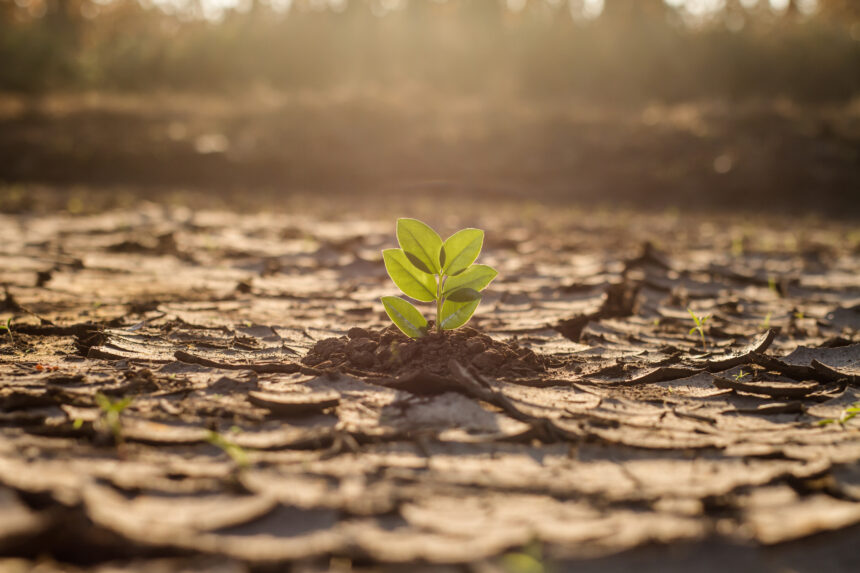
-- The invisible science that goes on beneath the grass, hemp, and trees
When discussing desert greening,
most articles focus on water, technology, and crops.
But at the site where sand turns to soil,
something entirely different is happening:
It’s a structural change at an invisible level.
The crucial scientific difference between sand and soil
The difference between sand and soil isn’t the amount of nutrients.
It’s the structure.
Characteristics of sand
– Large, discrete grains
– Easily evaporates water
– Highly airy but unstable
– Resists decomposition
Characteristics of soil
– Fine grains gather together to form clumps
– Maintains both water and air
– Continuous decomposition of organic matter
– Allows living organisms to settle
This “structure of aggregated grains” is called an aggregate structure.
Soil is simply a collection of sand with an aggregate structure.
How are lumps formed?
What’s important is not what you put in, but what connects them.
The main player in forming the aggregates is not the plants themselves.
The "invisible material" produced by roots
Plant roots
are more than just organs that absorb nutrients.
Roots secrete sugars, organic acids, and viscous substances into the soil.
These substances are called rhizosphere exudates.
These exudates adhere to the surfaces of sand grains, attract other grains, and bind the grains together.
This is where soil building begins.
As decomposition occurs, the sand changes
Organic matter does not become soil on its own.
When decomposition occurs,
organic matter changes into
highly viscous substances
stable carbon compounds
These compounds wrap around sand grains,
forming clumps that are less likely to crumble.
In this state,
water
is held slowly rather than flowing away all at once
The properties of the sand change.
Why start with grass?
Grass
– Has a large amount of roots
– Grows quickly
– Covers the ground
This helps
– Lower soil temperature
– Conserves moisture
– Continues decomposition
Grass is a device that sets the stage for decomposition and structure formation.
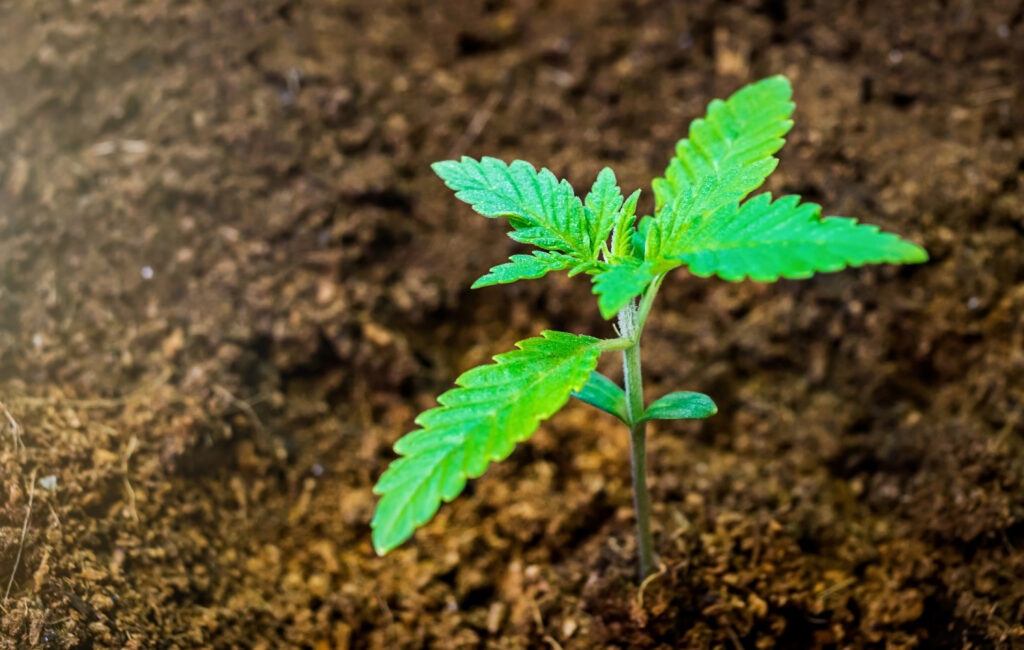
Why hemp is the deciding factor
Hemp roots
– Deep
– Linear
– Massive
– Penetrate the Earth.
This creates pathways for water and air,
– Promoting decomposition deep into the soil.
Furthermore,
– Harvesting and returning the hemp roots
– Carbon remains in the soil.
This design simultaneously promotes carbon storage and structural formation.
Why trees are "last"
Trees
– have thick roots
– regenerate slowly
If trees are planted before the soil has formed
– their roots do not spread
– steal water
If trees are planted after the soil has formed
– they provide fallen leaves
– stabilize the soil structure
Trees
exist to protect the completed soil,
but they are not the initial source of soil creation.
Why does nutrient water alone not produce soil?
Water containing dissolved nutrients
can help plants grow
but leaves no structure behind
It is difficult for decomposition
to occur
and for particles to bond together.
Hydroponics is a technology that sustains life,
and it omits the process of creating soil.
The scientific conclusion
The conditions for sand to become soil are clear:
– Roots move through the soil
– Organic matter continues to decompose
– Substances that bind the grains together are produced
– This process repeats year after year
Grass → Hemp → Trees
This order makes sense both ecologically and physically.