

The moment humanity began to control too much, the Earth began to break down.
If all of the data from the modern world were input into a supercomputer, what kind of future would it reveal?
War, population, economy, resources, technology, climate…
No matter how you adjust the conditions,
the answer often converges on a single answer.
“If things continue as they are, human civilization is headed for catastrophe.”
Advancing technology,
increasing renewable energy,
changing the financial system,
wouldn’t significantly change the outcome.
But there is one area
where the results can be changed.
And that is agriculture.
And it’s not modern agriculture.
Only organic farming, which doesn’t emit nitrous oxide,
is shown to reduce the probability of global extinction.
Carbon dioxide isn't the only thing destroying the planet
In discussions of global warming, carbon dioxide is often cited as the primary culprit.
However, it is actually nitrous oxide (N₂O) that is seriously destabilizing the Earth’s climate system.
This gas is primarily produced when agricultural nitrogen fertilizers are decomposed by soil microorganisms.
Its greenhouse effect is approximately 300 times that of carbon dioxide.
What’s more, it has a long lifespan in the atmosphere.
In the name of “ensuring a stable food supply,” humanity has continued to choose a structure that regularly generates the most powerful greenhouse gas.
Soil is a collection of life
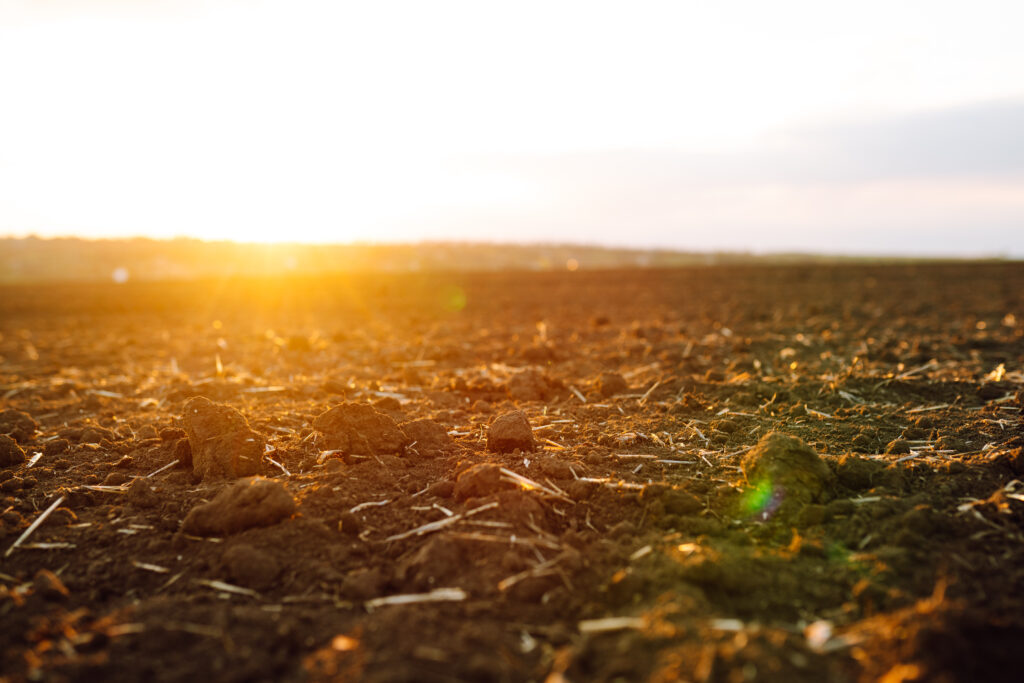
Soil is more than just a resource.
It’s a layer of life.
Billions of microorganisms thrive in every cubic centimeter of soil.
They connect with each other,
living in symbiosis with plants,
cycling carbon and nitrogen,
storing water,
and stabilizing surface temperatures.
In other words,
soil is the Earth’s immune system and respiratory organs.
But pesticides and chemical fertilizers
simplify, disrupt, and kill this intricate network.
In the name of efficiency and stewardship,
humanity has chipped away at the Earth’s innards for short-term profits.
The ice is melting and the earth's axis is moving
Observed Planetary-Scale Changes
According to NASA and related research,
the rapid melting of ice sheets and glaciers due to global warming
is even affecting the Earth’s rotational axis.
– Melting of the Greenland and Antarctic ice sheets
– Glacier loss in various regions
– Massive groundwater pumping
The resulting redistribution of water is shifting the Earth’s overall weight balance,
causing its rotational axis (axis).
Observations have shown that
the Earth’s axis has shifted approximately 10 meters over the past 120 years,
and since 2000, its eastward movement (toward the UK) has accelerated, particularly
due to the melting of Greenland’s ice and the depletion of groundwater in Eurasia.
Furthermore,
As ice melts and water moves toward the equator,
the Earth’s rotation slows slightly, like a figure skater spreading their arms.
As a result,
the length of the day has tended to lengthen by milliseconds.
Ice reality in 2026
The year 2025 was one of the hottest years on record,
and the cumulative loss of glaciers around the world and the Greenland Ice Sheet reached new highs.
As of January 2026,
one of the world’s largest icebergs, A-23A,
is in the final stages of collapse,
and satellites have captured images of blue meltwater accumulating on its surface.
Regarding the Arctic Ocean,
it has been warned that the 2030s
could be a realistic scenario in which summer sea ice disappears almost entirely.
This is not a prophecy; it is an observed fact that human activities are even affecting the planetary-scale physical phenomenon of the Earth’s rotation.

Hopi prophecies are not about the future
Presenting a Conditional Branch
Hopi prophecies are often spoken of as apocalyptic.
However, their structure is extremely clear.
– If we live in harmony with nature, the world will continue.
– If we dominate nature, but are cut off from it, the world will collapse.
They did not predict the future.
They merely demonstrated causal relationships.
This is not a religion,
but a conditional theory based on long-term environmental observation.
Why hemp helps the earth breathe again
Hemp wasn’t chosen because it’s symbolic.
Scientifically, it has outstanding circulatory repair capabilities.
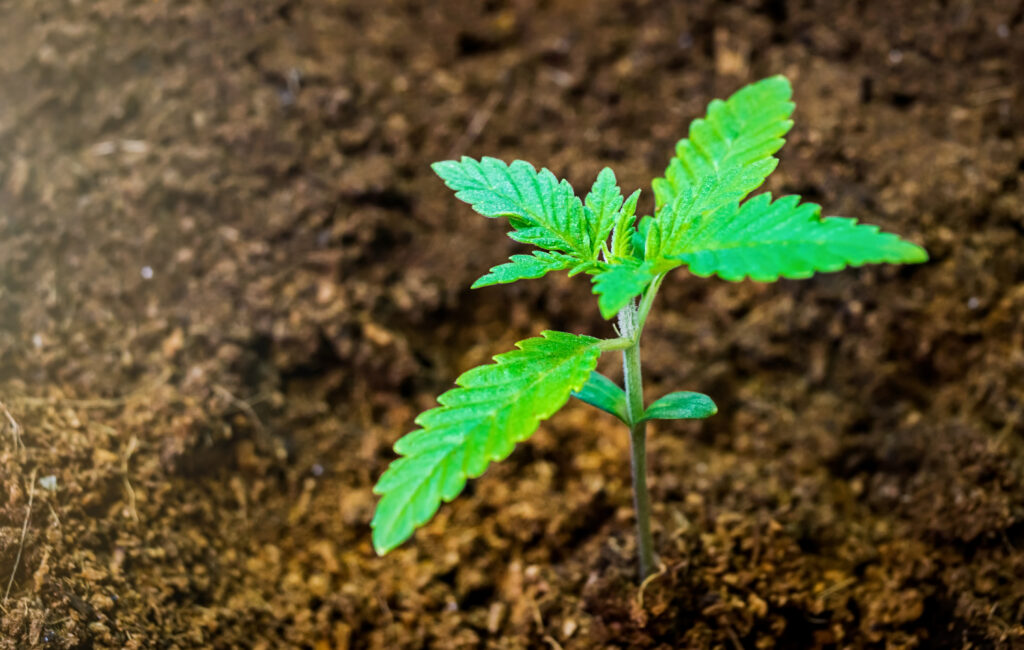
Hemp grows rapidly in a short period of time (about four months) and requires little fertilizer or pesticides.
Its deep roots, reaching several meters deep, powerfully absorb nitrate nitrogen from deep layers that ordinary crops cannot reach.
This fixes nitrogen in the soil and plant tissue before it can run off into groundwater or be released as nitrous oxide.
Furthermore, it simultaneously:
Restores soil microbial balance
Promotes carbon and nitrogen fixation
Additionally, hemp-derived biochar (HTC char) further reduces nitrous oxide emissions
Absorbs heavy metals (lead, cadmium, etc.)
Due to these properties, hemp is currently being rediscovered around the world as a core plant in the circular economy, where it can purify contaminated soil and be reused for building materials and energy.
In the medical and biotechnology fields, a synergistic pain-relieving effect has also been reported when hemp-derived ingredients are combined with nitrous oxide (laughing gas), making it interesting that hemp plays a role in calming excessive reactions both in the environment and in the human body.
Conclusion
Plant hemp as the world tree.
The Hopi prophecy,
Kimura Akinori’s words,
NASA observation data—all point to the same place.
The key to saving the Earth is restoration, not management.
Soil, not technology.
Circulation, not domination.
And the plant at the heart of this is hemp.
Hemp absorbs soil-polluting nitrate nitrogen and prevents the production of nitrous oxide, which warms the atmosphere.
Unless humanity chooses this,
the supercomputer’s answer will remain unchanged.
But if we choose,
the future can still be rewritten.