
Where do we look at in our lives?
We make countless choices every day.
Most of these choices are unconscious, but behind every choice lies
an assumption about how we view the world.
2,500 years ago, there were two philosophers whose differences in these assumptions were most clearly defined:
Plato and
Aristotle.
Although they were master and disciple,
they saw the world from completely opposite perspectives.
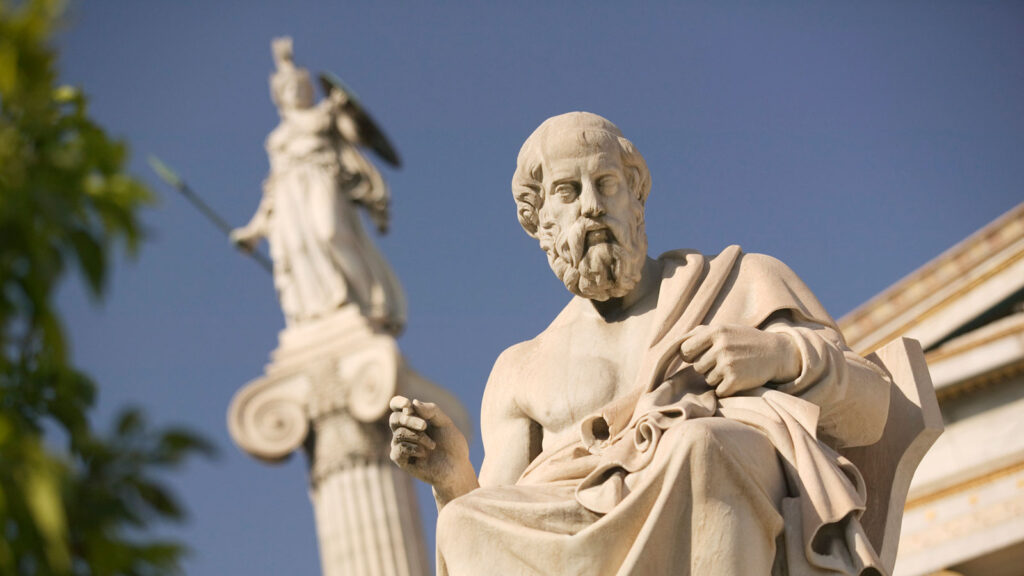
1. Plato's "Upper World" - What is invisible is the truth
For Plato,
the real world we live in is not “real.”
What we can see, touch, and count are all merely shadows of the truth.
His “Allegory of the Cave” is symbolic.
People live deep in the cave, believing the shadows they see on the wall to be reality.
But outside the cave, sunlight and the real world await.
Plato’s “Upper World (the World of Ideas)” is
perfect,
unchanging,
invisible,
and yet the standard for everything else.
Goodness, beauty, justice, truth—
these things do not “exist” somewhere in this world,
but exist above, and reality is merely an imperfect reflection of them.
This philosophy gave humans
an attitude of looking up to the ideal and a sense of placing the soul above the body.
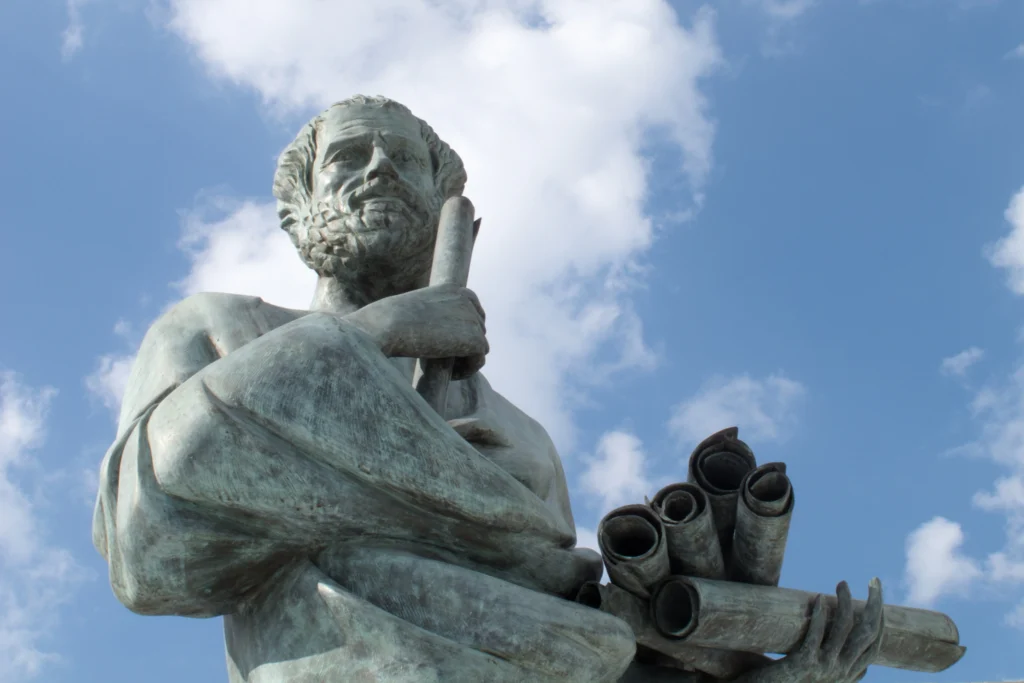
2. Aristotle's "The World Below": Start with Here and Now
Meanwhile, while deeply respecting his teacher, Aristotle
took a fundamentally different stance.
Truth lies here, not in the sky.
What was important to him was
what could be observed
what could be classified
what could be accumulated.
He did not reject ideals.
However, he believed that ideals did not exist apart from reality,
but resided in concrete things.
Ethics is not something imagined in the mind,
but something that develops through the repetition of daily actions.
Politics is not about dreaming of an ideal nation,
but about designing systems that take human nature into account.
In this way, Aristotle
laid the foundations of natural science, logic, ethics, and political science.
His eyes were always fixed on the ground.
3. "Top" and "bottom" are not in conflict
Plato and Aristotle are often spoken of as “idealism vs. realism.”
But the essence is not superiority or inferiority.
They played different roles.
Plato continued to ask questions.
“What is the purpose of human life?”
“What is good?”
“What is justice?”
Aristotle built upon them.
“So how do we realize it?”
“How do we utilize it?”
“How do we sustain it?”
Without a leader, those below will be confused.
Without a leader below, those above will spin their wheels.

4. Divided influences on religion and work
Plato and Aristotle are often spoken of as “idealism vs. realism.”
But the essence is not superiority or inferiority.
They played different roles.
Plato continued to ask questions.
“What is the purpose of human life?”
“What is good?”
“What is justice?”
Aristotle built upon them.
“So how do we realize it?”
“How do we utilize it?”
“How do we sustain it?”
Without a leader, those below will be confused.
Without a leader below, those above will spin their wheels.
5. The biases of modern people and the consequences
Today’s world is dominated by numbers, results, evaluations, and efficiency.
This can be seen as an extremely bloated version of Aristotle’s “lower world.”
As a result, questions such as:
Why do we work?
What do we live for?
What do we believe in?
On the other hand, what happens to those who only look up?
They run away from reality,
They avoid responsibility,
They don’t take action.
They only talk about the world in terms of “awakening” and “vibrations,”
and they have no grounding.
Both are one-eyed ways of living.
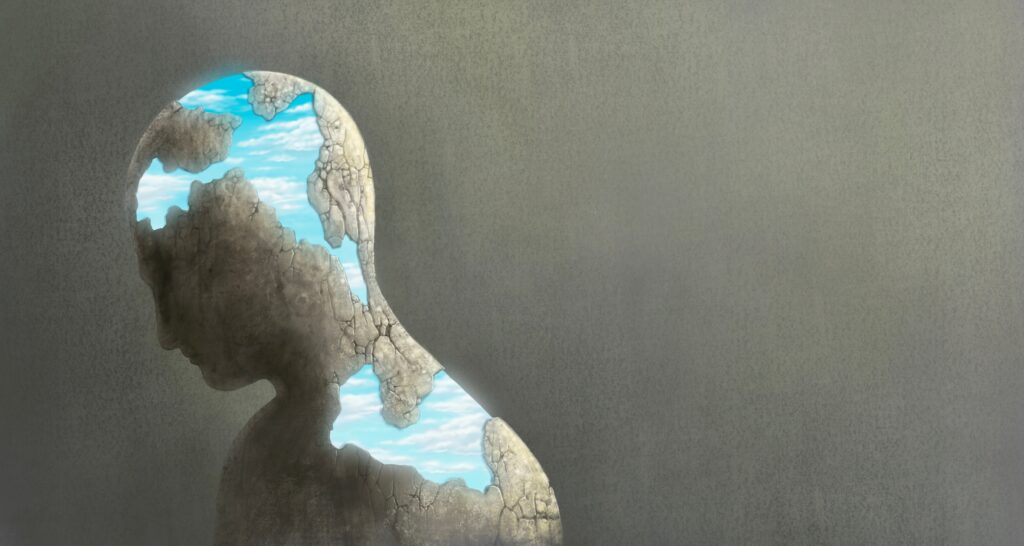
6. What you really need is someone who can go back and forth.
People who, like Plato, always look up,
often see reality as “impure” or “low.”
People who, like Aristotle, always look down,
unconsciously forget the goal itself and become obsessed with optimizing the means.
The problem isn’t choosing one or the other,
but becoming trapped in one.
In modern society, the following divisions are common:
Those who talk about ideals
are accused of “not understanding reality.”
Those who manipulate reality
are accused of “lacking dreams” and “being cold.”
But ideals aren’t supposed to be a way to escape from reality,
but a “compass” that allows us to continue to accept reality.
And reality isn’t supposed to betray ideals,
but a “place” to test, refine, and give shape to ideals.
A truly mature person is someone who
looks up, without losing sight of meaning,
walks down, without shirking responsibility,
and can quietly shift their perspective when necessary.
In Platonic terms,
it is someone who continues to ask, “What is good?”
In Aristotelian terms,
it is someone who can decide, “So, what will I do today?”
They have convictions, but do not fall into self-righteousness.
They are realistic, but do not sell out their soul.
A person who is only idealistic cannot protect anyone.
A person who is only realistic cannot guide anyone.
But someone who can travel between these two extremes
can stand next to someone who is lost,
and, while keeping their feet on the same ground,
show them only the direction to go.
This is not the role of a ruler or a savior.
It is the role of a companion.
Conclusion
If we only look up, we will lose our footing.
If we only look down, our hearts will wither.
That is why people
must have both an upturned gaze and firm feet.
Philosophy is not knowledge that allows us to escape from reality,
but a perspective that allows us to continue to accept reality.
Right now,
are we confined to the top or the bottom?
And do we have enough space within ourselves to go back and forth when necessary?