
- The result of focusing too much on "fixing"
At first glance, agriculture and medicine seem like completely different worlds.
But if you look deeper, you’ll see that they’ve been making the same mistakes in the same places.
That is,
they’ve been too focused on eliminating symptoms.
When a problem arose, I had the same reaction.
When insects multiply in agriculture,
and when diseases appear in medicine.
In both cases, the initial decision was the same.
Before looking for the cause
Before looking at the whole picture
We applied something that would work.
In agriculture
→ pesticides
In medicine
→ medications
In the short term, it certainly worked.
But that success delayed the next decision.
"It worked" is not "It got better"
When pesticides are used to eliminate insects from rice fields,
at first glance, the problem appears to have been solved.
Similarly, a body whose symptoms have been eliminated with medication
gives a sense of relief.
However,
the reasons why the insects disappeared and the symptoms appeared
are both left behind.
As a result,
– Agriculture deepens dependency
– Medical care increases chronic conditions
Common misconception: "Strong management leads to stability"
There is a common idea between the two.
If you exert strong external control
If you control it,
it should become stable.
However, in the living world, the opposite is true.
The more control you exert,
the less ability you have to recover on your own.
What happened in agriculture
It kills insects, reduces the number of bacteria, weakens the soil, makes crops more susceptible to disease, and requires more chemicals.
This isn’t a vicious cycle, but rather a continuation of the same pattern.
What happened in medicine
– Suppression of symptoms
– Disappearance of body signals
– Difficulty in recognizing the cause
– Decreased body coordination
– Increased medication
This also follows the exact same pattern.
The limitations of the idea of "eliminating the enemy"
In agriculture,
insects have become the enemy.
In medicine,
symptoms have become the enemy.
But originally,
insects and symptoms
were meant to signal abnormalities.
They have become targets to be eliminated.
Why did this happen?
The reason is simple.
– It’s easy to see that it works.
– Results are quick.
– Easy to quantify.
This also worked well with the system.
Both agriculture and medicine are worlds that require short-term results.
The overlooked commonality
In both soil and the human body,
bacteria play a key role
water transports them
flow is vital
This premise was overlooked in both fields.
As a result,
the soil became hard and
the body became more easily fatigued.
Why are they being reviewed at the same time now?
In recent years, several movements have emerged simultaneously around the world.
Organic farming
Soil regeneration
Intestinal biodiversity reassessment
Lifestyle redesign
And a rediscovery of hemp.
These aren’t separate trends.
They’re the result of people simultaneously recognizing the same breakdowns in the same places.
The common problem was the "adjustment system"
What agriculture has disrupted is
the self-regulation of soil bacteria.
What medicine has disrupted is
the body’s internal self-healing and self-regulation.
In both cases,
the result of excessive external intervention
was a weakening of the body’s inherent “balancing power.”
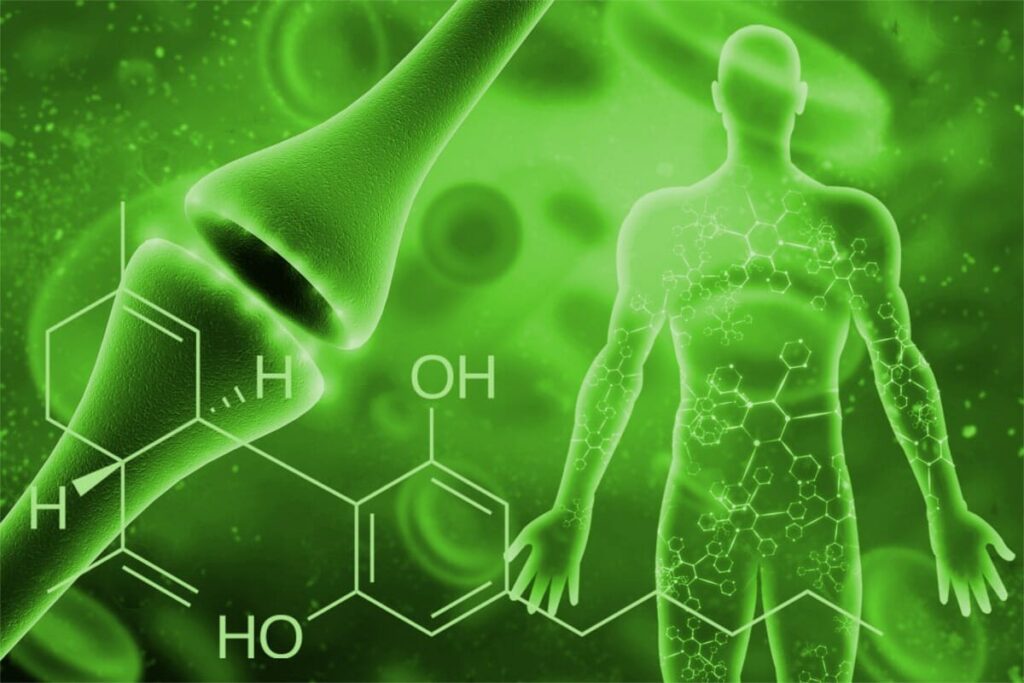
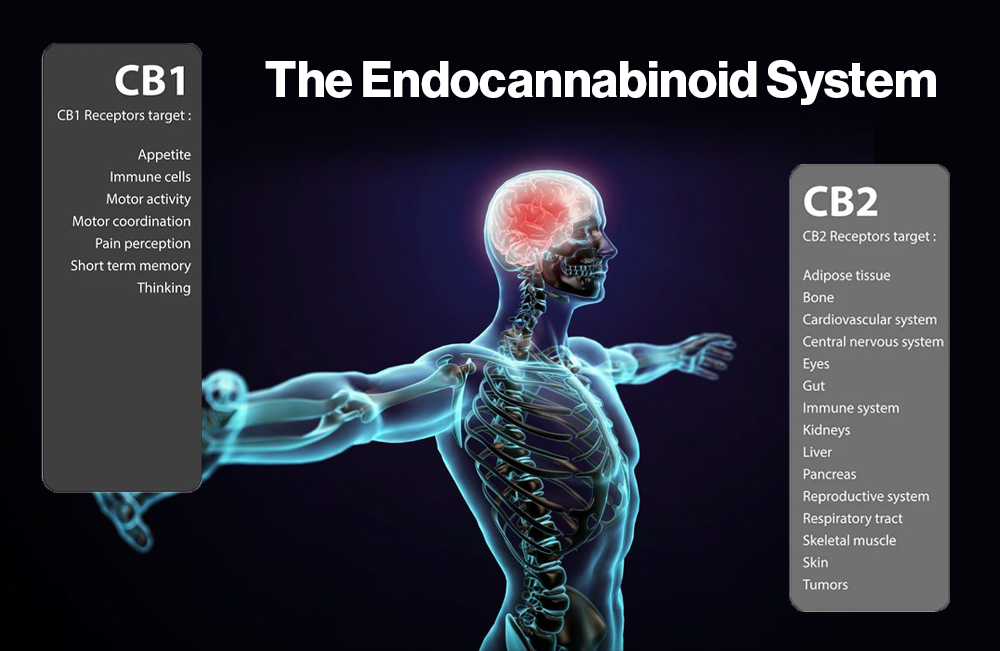
The ECS (endocannabinoid system) has been attracting renewed attention.
The human body naturally has a system called the ECS (endocannabinoid system) that maintains balance throughout the body.
The ECS’s functions are:
– regulating nerve excitation
– suppressing runaway immune responses
– preventing inflammation from spreading beyond its limits
– regulating pain, sleep, diet, and mood
In other words, it acts as a central regulatory system that works to return the body to normal.
Hemp is not "effective" but "restores"
The compounds in hemp
act the ECS in the following way:
– They don’t push anything too hard
– They calm excessive reactions
– They help to address insufficient regulation
This is different from medications that relieve pain or stop symptoms.
→ They allow the body more room to regain its balance.
The exact same structure as what happens in soil
This point is crucial.
– In the soil
→ Killing too many bacteria disrupted self-regulation.
– In the body
→ Suppressing symptoms too much slowed self-regulation.
So now,
– In the soil, “returning bacteria.”
– In the body, “supporting the ECS.”
Corrections are occurring in the same direction.
Why now?
The reason is simple.
– We’ve reached the limit of what can be done by adding resources from the outside.
– Despite being managed, they’re prone to damage.
– The more we improve them, the harder they are to recover.
Both agriculture and medicine have reached a point where they can no longer improve.
So, simultaneously, we’re beginning to move in these directions:
– Suppress → Regulate
– Control → Coexist
– Utilize → Restore
Why hemp is being reevaluated for both agriculture and health
Hemp
– In the soil
– → Creates an environment where bacteria can play a central role
– In the body
– → Restores space for the ECS to function
Both play a role in “bringing regulatory systems to the forefront.”
That’s why hemp is being reevaluated simultaneously in the contexts of agriculture and medicine,
soil and the body,
and the environment and health.
Summary
There’s one reason they’re being reevaluated at the same time.
We realized that it wasn’t the location of the damage that was the same, but the way it was broken.
Fungi in the soil,
and the ECS in the body.
Both are inherently present, silent regulators.
What’s needed in the future is not even stronger intervention.
We need to gently give back the space for these regulators to work.
That alone explains why hemp is once again taking on meaning.