

Science shows soil is a huge cooling system
The reason glaciers and polar ice are melting is not simply because temperatures are rising.
To be more precise, the underlying reason is that excess heat is continuing to enter the Earth system, and the mechanisms for releasing that heat are not keeping up.
And from a scientific perspective, of these “heat release mechanisms,”
the one that is currently most weakened is soil.
Why does ice continue to melt without stopping?
First, let’s review the mechanism behind ice melting.
– Increased levels of carbon dioxide and methane in the atmosphere
– Radiated heat is less likely to escape into space
– The ocean and atmosphere are warmed simultaneously
– Rising ocean temperatures cause melting to occur beneath the ice
– Reduced white ice, increasing the amount of dark ocean surface
– Reduced solar reflectivity, further absorbing heat
Once set in motion, this chain reaction has inertia.
In other words, stopping emissions will not immediately halt melting.
The key point here is that
there are virtually no means of directly cooling ice on a global scale.
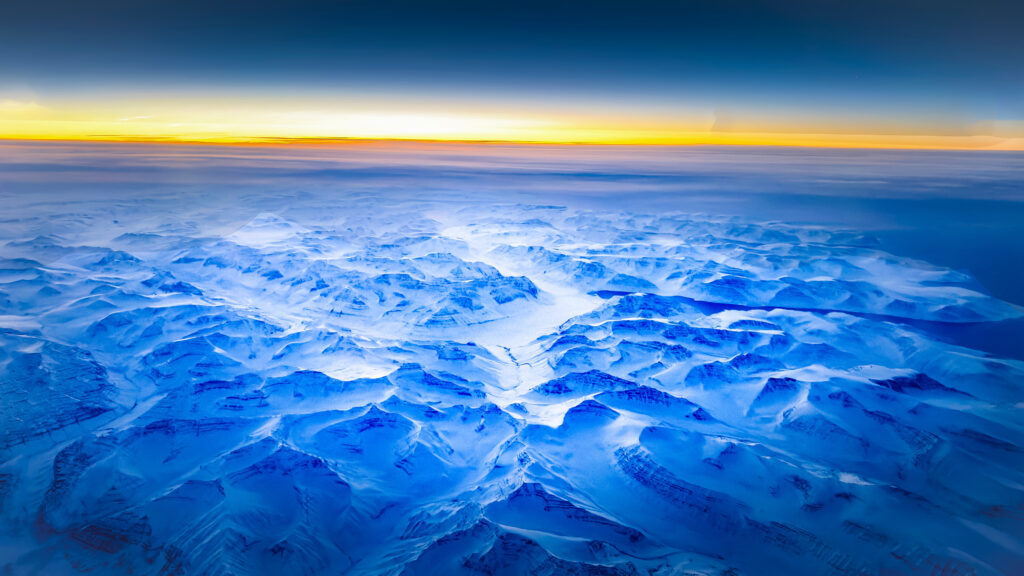
"Cooling" does not mean lowering the temperature
Contrary to popular belief, global cooling does not simply mean lowering the temperature like an air conditioner.
Scientifically, it involves three things:
Slowing the rate at which heat accumulates
Reducing the causes of heat
Accommodating sudden changes
And the only natural system that simultaneously achieves all three of these goals is soil.
Soil is the Earth's largest carbon storehouse
When comparing the amounts of carbon on Earth, its role becomes clear.
– Atmospheric carbon: Approximately 830 gigatons
– Terrestrial vegetation: Approximately 560 gigatons
– Soil: Approximately 1,500-2,400 gigatons
Soil already holds more than twice the amount of carbon as the atmosphere.
In healthy soil,
– Plants absorb CO₂ through photosynthesis
– Some of the carbon moves underground from the roots
– Soil bacteria decompose and reconstruct it
– Long-term fixation as stable organic matter occurs.
This carbon
will not return to the atmosphere for decades, or even centuries, depending on conditions.
In other words, soil
functions as a decelerator, transferring heat from the air into the ground.

Soil moisture actually lowers the ground surface temperature
Carbon isn’t the only thing that has a cooling effect.
Soil rich in organic matter and microorganisms
– Retains rainwater
– Removes heat during evaporation
– Prevents rapid heating of the surface
Actual measurements have shown that soil surface temperatures can be 5 to 15 degrees Celsius lower than bare or degraded soil.
Conversely, in
– Over-plowed farmland
– Soil with little organic matter
– Land without microorganisms
– Rainwater runs off
– Drying progresses
– The surface is heated by direct sunlight
As a result,
the farmland itself becomes a heat source.
The often-overlooked relationship between nitrogen and soil bacteria
Carbon dioxide isn’t the only gas that strongly contributes to global warming.
Nitrous oxide (NTO) has the following characteristics:
– Its greenhouse effect is approximately 300 times that of CO₂
– Its primary source is agricultural land
In healthy soil,
– A diverse range of bacteria cycles nitrogen in stages
– Recycles nitrogen between plants and microorganisms
– Leakage into the atmosphere is reduced
On the other hand,
In soil where microorganisms have been destroyed,
– Nitrogen reacts all at once
– Releases nitrogen into the atmosphere as nitrous oxide
In other words, soil bacteria act as a regulator,
restraining the production of this extremely potent greenhouse gas.
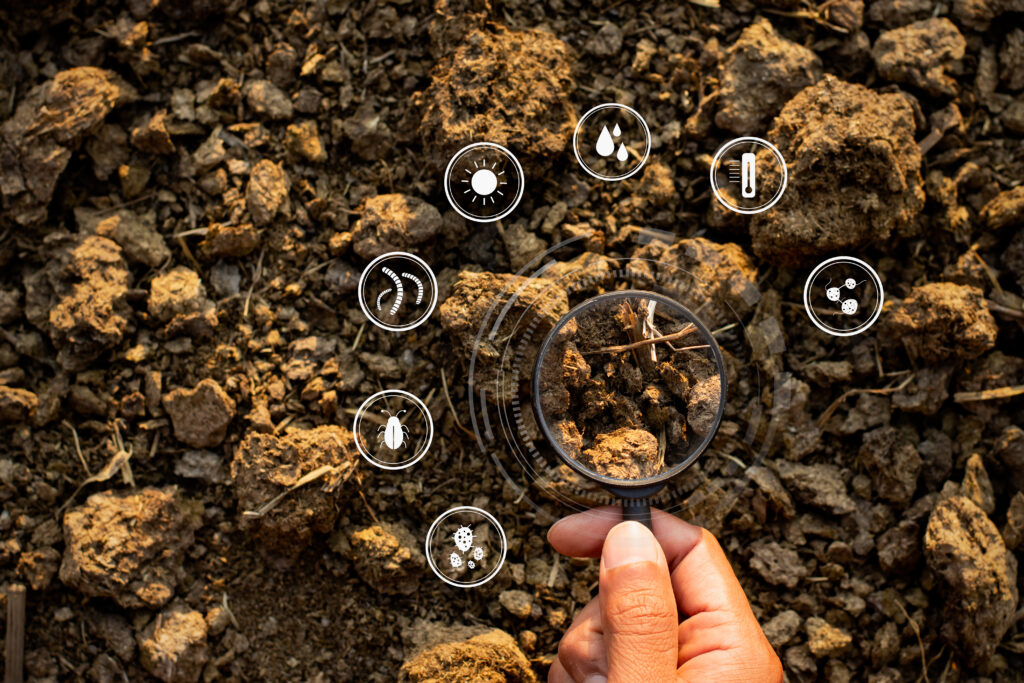
Soil absorbs the shock of climate change
The current problem
is not so much the warming itself, but the rate of change.
Healthy soil
– absorbs heavy rainfall and moderates floods,
– retains water during droughts,
– moderates temperature changes,
which simultaneously slows the rate of ecosystem collapse,
destabilization of agriculture,
and indirect stress on ice sheets.
Soil acts as a buffer for the entire Earth system.
Why soil is the "only decelerator"
What’s important are the properties of soil.
– It already exists throughout the planet.
– It doesn’t require electricity or centralized management.
– It’s distributed across regions.
– It will self-repair if left undisturbed.
No artificial technology meets all of these conditions.
There’s no need to create new soil.
Simply choose not to disturb it, and its functions will recover.

Conclusion
The real reason the ice is melting
is because the Earth is trapping too much heat.
And the device that can slow that heat isn’t some future technology,
it’s already right under our feet.
Soil is Earth’s largest cooling system,
transferring carbon underground
absorbing heat with water
reducing greenhouse gas emissions
mitigating the impact of climate change
all at once.
Protecting the ice isn’t about looking at the sky.
It starts with looking at the soil.